As mentioned in my previous post on the Whistling Pottery, my family traveled to Peru, and as part of our tour, we stopped by a luthier who makes instruments from historical Peru. One of the instruments he makes is the Ocarina, which is under the family of vessel flutes. Unlike standard orchestral flutes, vessel flutes are wind instruments with a closed, hollow body that acts as a sound chamber. Air from the mouth is blown into a mouthpiece and travels across a sharp edge within the instrument, creating vibration and, therefore, sound. By covering different combinations of finger holes carved into the instrument, we can raise or lower the pitch produced by the instrument. And the Incas, with their rich culture, created ocarinas in the shapes of the three most important animals in their culture: the condor, puma, and serpent.
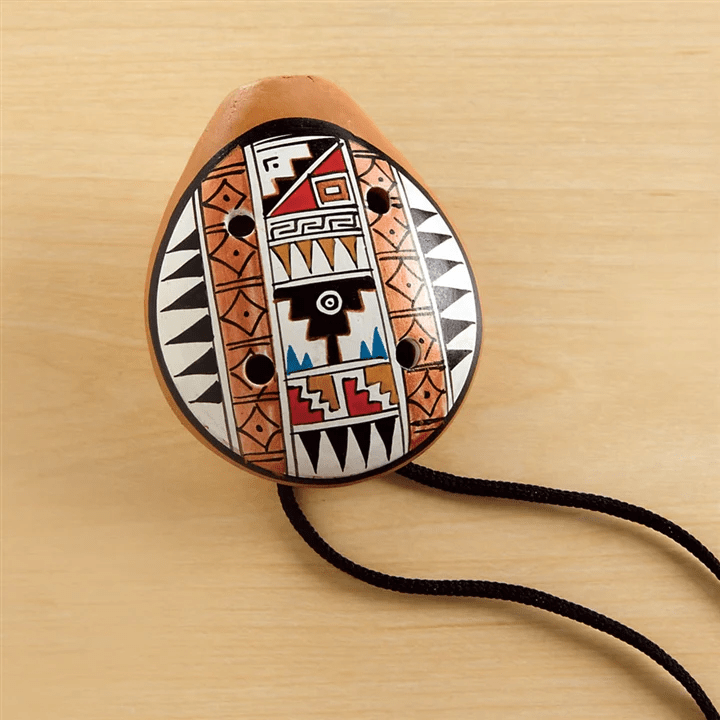
Image of an ocarina
“Authentic Peruvian Ocarina with Necklace.” The Music Stand, 2025, themusicstand.com/products/authentic-peruvian-ocarina-with-necklace?srsltid=AfmBOoo102bqYRdTr8Vh-mc1GSMuysfs7-WgGLnyXgE2YnDgjo1cFPGD. Accessed 12 Jan. 2026.
The way the ocarina works is on the same principles that today’s concert flute does: edge tones. According to Google, “an edge tone is a sound produced when a fast-moving [stream] of air strikes a sharp edge, causing vibrations that create a distinct pitch,” which is exactly what is happening inside both the concert flute and the ocarina. When playing the flute, the flutist places the lip plate below their bottom lip, allowing air to pass over the embouchure hole when the flutist blows. This produces sound via the phenomenon of edge tones. Similarly, when air is blown into the mouthpiece of the ocarina, the air is guided over a sharp edge at the perfect angle to create sound, much like the flute’s embouchure hole.
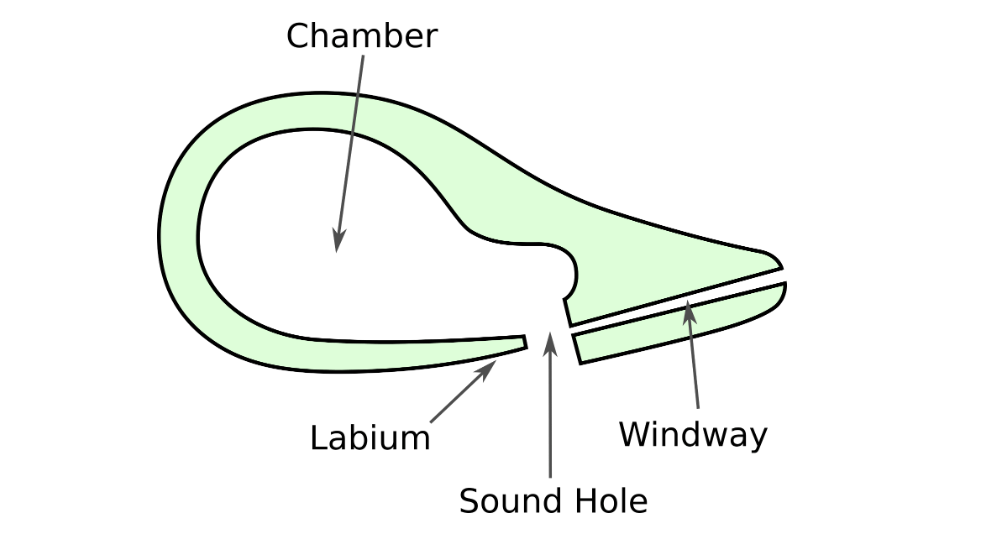
Image of the inside of an ocarina
“How Ocarinas Work.” Pure Ocarinas, 2025, pureocarinas.com/how-ocarinas-work. Accessed 12 Jan. 2026.
Above is a diagram from Pure Ocarinas that illustrates how this works inside the ocarina. Air passes over that sharp edge by the sound hole, which creates sound.
That’s all for this blog! I’ve added links below for further research.
 The Musical Press
Leave a comment