The Witch’s Theme. The first theme that we hear when the curtain rises in the famous Broadway musical Wicked, with music and lyrics written by the man himself, Stephen Schwartz. In this post, we’re going to (very) briefly break down the theory, connotations, and its uses and effects that this famous theme has throughout the musical. Let’s dive in.
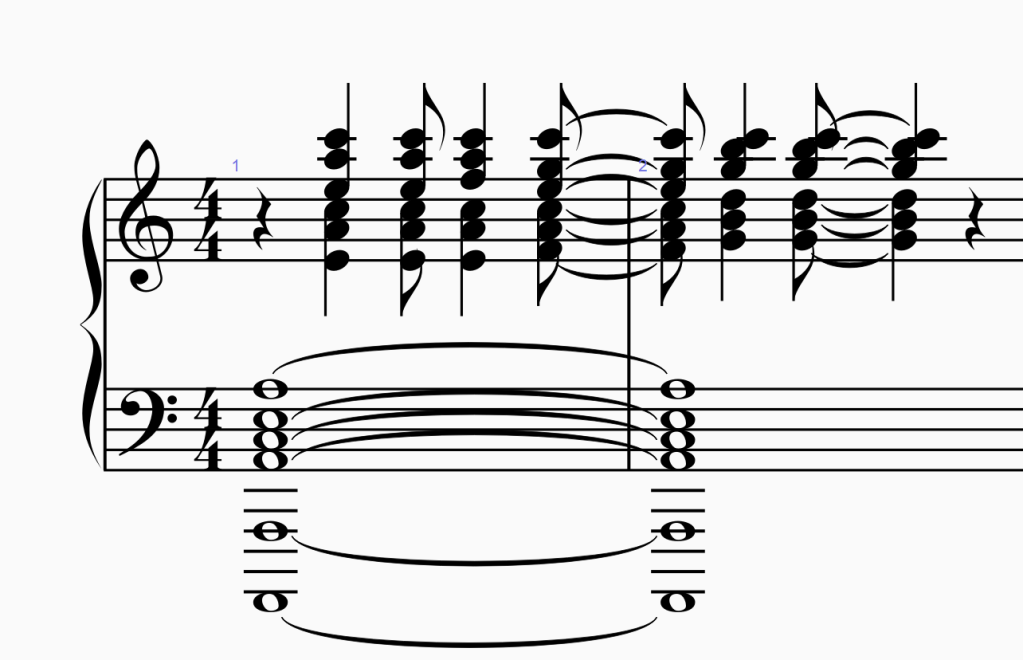
Transcribed with Sibelius Ultimate. Playback generated by Noteperformer 5.
I’m sure that you can see just from listening to the nine seconds of the witch’s theme that this motif was written to evoke emotions of distress, fear, and shock. The big, dramatic chords almost put the witch into the position of being figuratively big and someone to be scared of. I really want to zoom in on the last chord that the “right hand” of the piano plays. In the lower voice, we hold a G chord, and in the top voice, we play a strange C5(add7) chord. This tension between the top C and the rest of the chords, which are very G major, creates a sense of uncertainty in the music, almost as if the music is trying to tell us to stay aware and look out for the Wicked Witch, which is quite literally what Schwartz intended this motif to sound like: a warning to watch out for the Wicked Witch.
This theme, with its connotations and warnings, is used throughout the musical to show Elphaba’s transformation into the Wicked Witch, Oz’s perception of Elphaba, wickedness in Elphaba, and much, much more that I won’t bother to list right now. The Witch’s Theme is used everywhere within Wicked and I will definitely mention when it comes up in future breakdowns of numbers, scenes, and background music.
 The Musical Press
Leave a comment